
Because who you are matters.
Charlotte Jewish Day School is a vibrant, growing learning community rooted in an educational philosophy that motivates, challenges, and celebrates the whole child and is united by our shared love for and connection to Judaism.

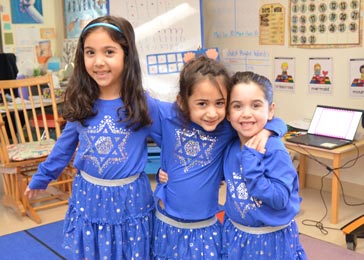
Transitional Kindergarten
(TK)
Learn more →
Transitional Kindergarten (TK)
Elementary School
(K-Grade 5)
Elementary School
(K-Grade 5)
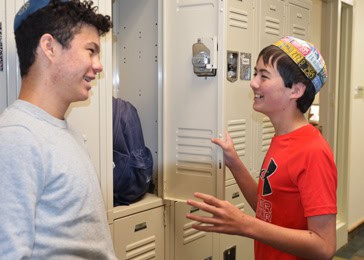
Middle School
(Grade 6 and Up)
Middle School
(Grade 6 and Up)
Why CJDS
Academically
Excellent
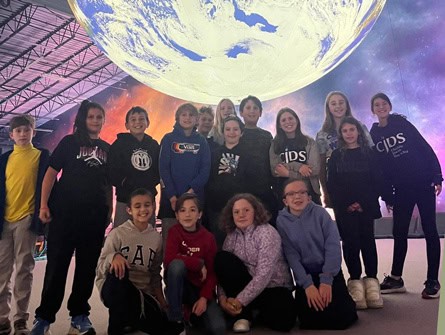
Guided by outstanding teachers, CJDS students tap into their strengths becoming more resilient, more motivated, and more accomplished learners. Our rigorous curriculum in general and Judaic studies fosters creativity and critical thinking and prepares students to outpace their independent school peers.
Essentially
Jewish
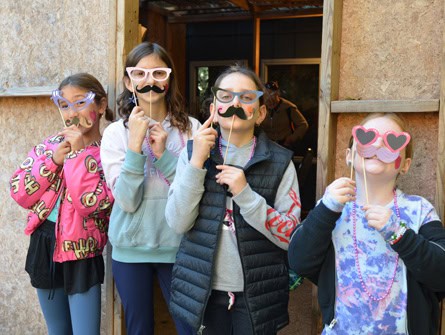
CJDS provides a comprehensive education in Torah, Hebrew language, and Jewish beliefs, customs and laws, instilling a love of Judaism. Confident in who they are, our students celebrate and take pride in being Jewish.
Intentionally
Affordable
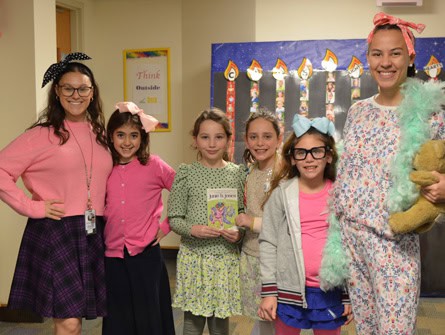
Our goal is to provide a quality Jewish education to all Jewish families who desire it for their children. So we have developed a way to make tuition as affordable as possible for as diverse an array of families as possible. Our confidential Tuition Affordability program tailors costs, enabling parents from all walks of life to choose CJDS.
By the Numbers


Follow CJDS on Instagram
🔍 Kindergarten Testing Demystified 🔍
If you have a rising TK or kindergarten student- please join us on Thursday, October 22 at 7:00 PM for Kindergarten Testing Demystified, featuring Dr. Barrie Morganstein of Psych CLT.
You may find yourself wondering - What actually happens during a TK or Kindergarten assessment? What are children asked to do? And what do schools learn from it?
During this informative evening, we’ll take a closer look at:
✨ What a TK and Kindergarten assessment looks like
✨ The types of activities children may be asked to complete
✨ The developmental and learning skills we observe
✨ How we put all of the pieces together to create a picture of each child
✨ How assessment information is used by the school to better understand and support students
Our goal is to pull back the curtain on the assessment process and help families understand what we’re looking for, why we’re looking for it, and how the information helps us see the whole child.
We hope you’ll join us for this helpful and informative evening!
📅 Thursday, October 22
🕖 7:00 PM
📍 Charlotte Jewish Day School
For more information and to attend email Barbara Foxx: bfoxx@cjdschool.org
.
#charlottejewishdayschool #jewisheducation #jewishmomsofcharlotte #tkreadiness #kindergartenreadiness
Oct 19

What would it feel like to survive 47 days at sea?🛶🌊
.
Our 8th graders stepped into the story of Unbroken: Young Readers Edition through an immersive classroom survival simulation. After reading about Louis Zamperini’s harrowing experience, students constructed their own model liferaft to replicate the dimensions of Zamperini‘s raft, experiencing firsthand just how limited and cramped the space was.
.
Then came the real challenge: could they work together in that space?
.
Cramped quarters quickly tested patience, communication, problem-solving, and teamwork. More importantly, the experience gave students a tangible way to develop empathy and connect with Lewis‘s extraordinary resilience in a way that went far beyond simply reading about it.
.
Sometimes the best way to understand a story is to step inside it.
.
At CJDS, learning doesn’t just happen on the page- it comes to life through hands-on, meaningful experiences.
.
#handsonlearning #cjdschool #jewishmomsofcharlotte
Oct 8
🌟 CJDS seventh graders are learning about the life cycle of stars.
⭐️ Quiz!
All stars begin inside a giant cloud of dust and hydrogen gas called a …. ? (6 letter word)
🤔 Think you know the answer? Comment below!
CJDS has a rigorous science curriculum, yet still allows for weaving in the arts. Art and science are deeply connected; art gives scientists a creative way to imagine, visualize, and communicate complex ideas.💡
💫 Come check us out! #jewishcharlotte #tk8 #charlottejewishdayschool #jewishmomsofcharlotte #jewisheducation
Oct 8
🀄️ Smiles and tiles! 😊
CJDS after school mini- mahjong club is on a roll!
Bams! Craks! Dots! 🀄️
These cuties are building valuable cognitive, math, and social skills through engaging play; and improving memory, focus and pattern recognition. But- shhhh- they’re just having fun! 🤩
CJDS offers a variety of after school program- from photography, to gardening, to art, robotics and much more. Check us out!
#jewishcharlotte #tk8 #charlottejewishdayschool #jewishmomsofcharlotte #charlottejewishdayschool
Oct 1